It is an absolute fact that time only marches one way. Apparently, so do prices. We shooters
know that too well. Our hobby, or should we admit to it being a passion, possibly even an
addiction, has become expensive. Not only that, but as reloaders many of our beloved
components are not readily, or not at all available. Or have been discontinued all together.
It has come down to ‘if you want it and see it, buy it’, sticker shock or not. Things were
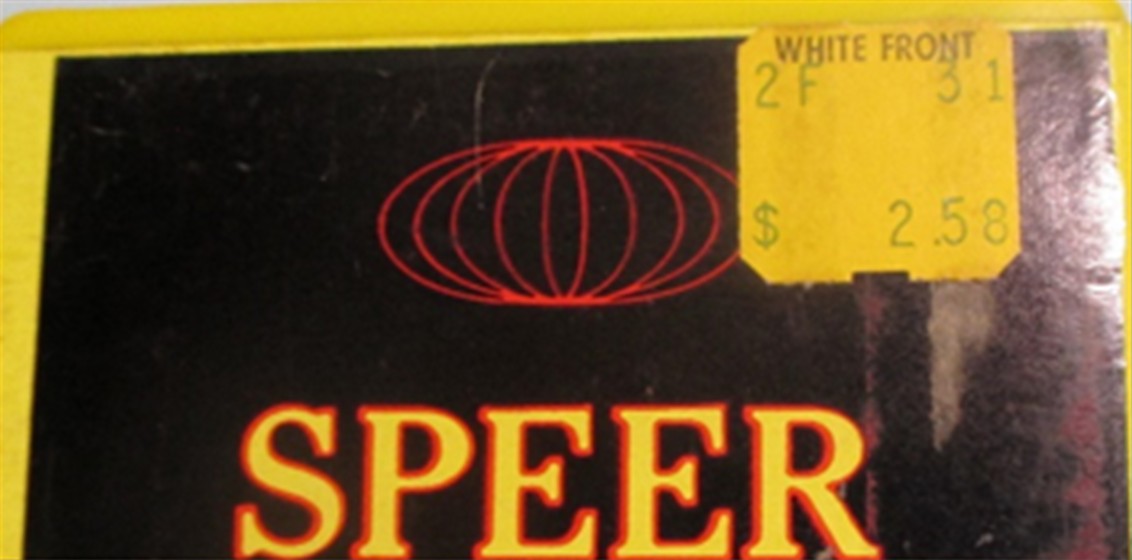
not always like that. Just look at this box of Speer bullets containing .308 caliber
jacketed bullets, going for $2.58! I have no idea when or where the purchase was made.
In early October 2024 I found myself sort of between those two worlds. Bruno’s was running
a yard sale. After about their 4th reminder-email I did drive over there. They had a lot
of old stuff out on tables. If you were a cartridge collector, bringing a lunch would have
been smart. It took me a good hour checking out those yard sale items. By the time I left
$130 dollars had changed hands.
For that money more than 8 boxes of jacketed bullets and two pounds of powder came home
with me. For comparison, $130 would not have been enough for two cans of Reloader 15.5
that day. Of course, the powder I bought wasn’t “fresh”. Far from it, two cans of H4227
must be decades old. At least the partial can, one of the ‘more than’ items, was of recent
production, right before Hodgdon discontinued that powder.
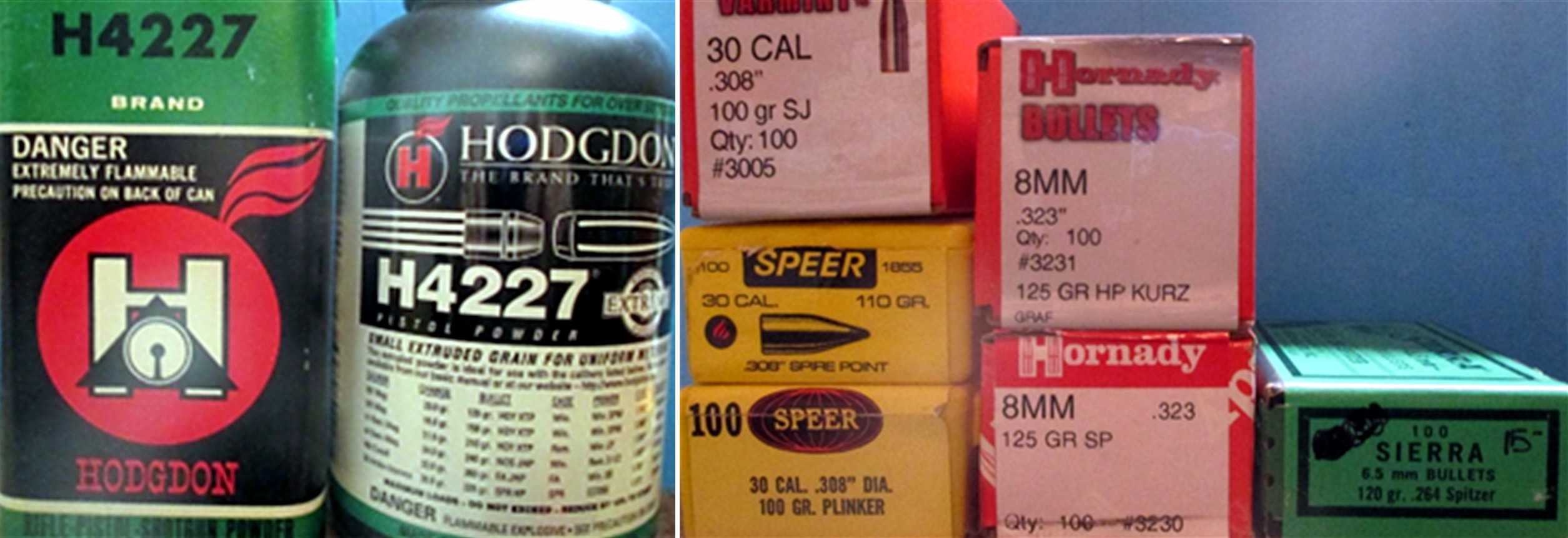
Similar with the bullets, some quite old, some of more recent manufacture. The picture
shows a sample. Based on current websites, only a version of the 6.5mm Sierra 120 grain
SP is still available today.
Fine, I got the stuff for a good price by today’s standards. So, how good is it? Time to
load and then test. Regarding the projectiles it will be simply a matter of where they
land on my targets. The old(er) powders require, shall we say, more discernment. Age and
especially storing condition could affect their chemical composition. Turns out that the
fuel in the younger partial can of H4227 smelled and looked just like the H4227 I had been
using up until about a year ago. It has a greenish appearance, similar to H4350, but its
kernels are obviously smaller, like you’d expect for a powder for magnum handgun ammo. In
the past I had never used H4227 that came in those boxy containers with plastic friction
plug. These cans were totally full. The powder had the same shape but looked blackish
instead of greenish. My assumption is that it looked like that when it was fresh however
many decades ago. Because it was consistent throughout the can and there was no ‘off’
smell to it, something I had encountered once or twice when evaluating old powders in the
past.
Test bed would be my Ruger American in 300 BLK. Rugers are rugged, and H4227 is suitable
for the 300 BLK. Besides, the caliber lets me try some of those older projectiles at the
same time. In case my reloads would result in patterns rather than groups, the target
stood at 50 paces. And in the unlikely event that pressures should exceed what the metal
is capable of, the Ruger would be easiest to replace.
The Sierra 6.5mm 120 grain SPs got a ride through my Tikka CTR in 260 Rem. Their intended
purpose was to (hopefully) down several pigs during future HSC CF Rifle Silhouette events.
Therefore, I used the same load I had just shot during our Oct 12 match, where 6 pigs
toppled.
Buying those 125 grain 8mm projectiles was more of a ‘why not’ decision. The 98K Mauser I
got from Bob Martin is my only rifle with open sights. I rarely shoot it, and if, then
with older military FMJ ammo, stuff that at best goes bang half the time. When it does,
it kicks! No wonder, with 198-grainers leaving the muzzle at almost 2500 fps. Those 125s
should mitigate that some. At least that was my thinking when I grabbed them. Since I was
at it, two other types of 125 grain bullets, not from the yard sale, also got a quick test.
I had held off on that when Large Rifle primers were nowhere to be found. Now they are
more available again.
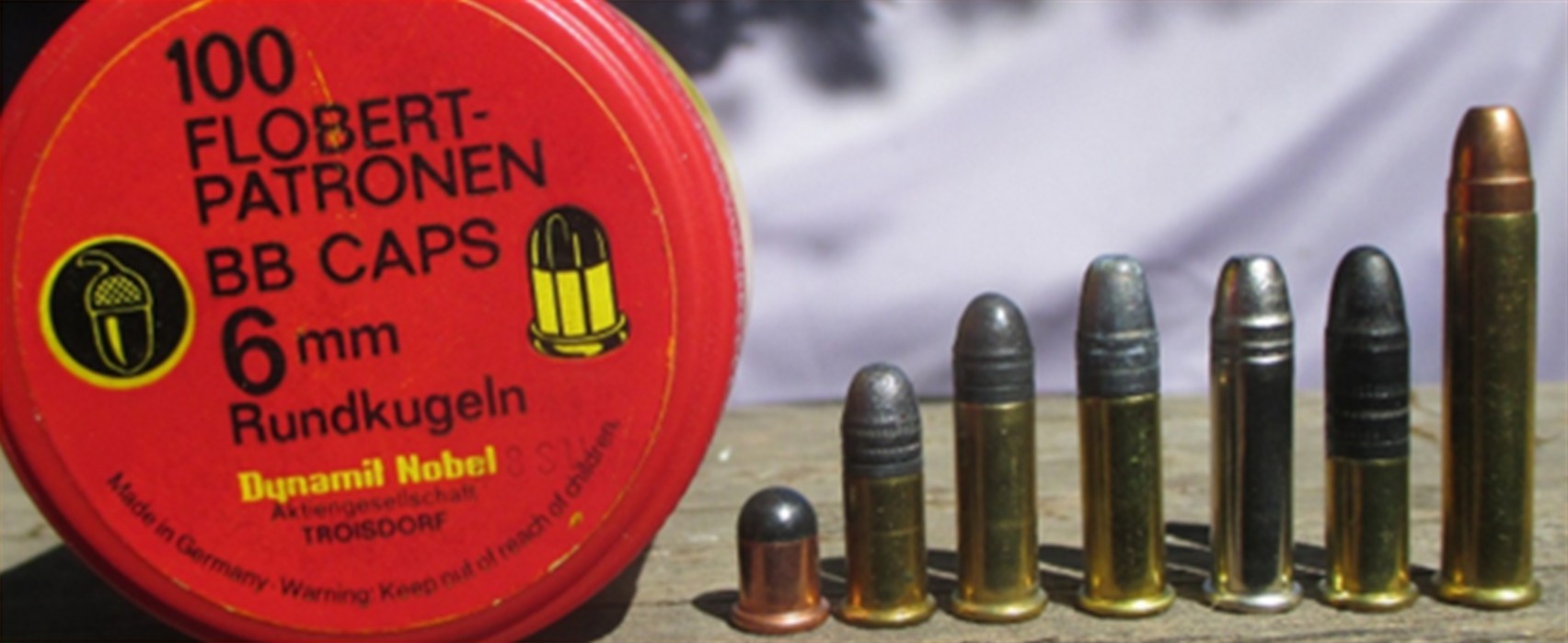
And finally, the absolute antidote regarding recoil. The last item of the ‘more than’
stuff is a can of Flobert 22s. Until that yard sale I had never seen such ammo here in the
US. Much as I hate to admit it, Frenchman Louis-Nicolas Flobert invented the rimfire
ignition system.
Anyway, back in Germany we had a simple petite single-shot bolt action from Burgsmueller in
the house, the only firearm my dad owned, chambered for the Flobert. “Tesching” they
call such rifles. Designed to rule gardens, it was up to that task as long as the distance
to target/critter would not go much past 25 steps. Sparrows or starlings fell out of our
cherry trees. Occasionally wild pigeons, bunnies, and once also a hare showed up on the
dinner table, mostly when mom was defending her garden. The projectile weighs app 16
grains, and only the priming compound propels it. The case contains no powder.
|
Doubtful that dad ever did so, but my older brother seriously souped up that little rifle
by resting its muzzle on some wooden board and forcing a .22 Short into the chamber, meaning
bullet and part of the case well into the rifling until the bolt closed. Those normal speed
Shorts do about 1000 fps. After firing, extraction was rather sticky of course, with the
case showing obvious rifling marks. And since that worked, even a .22 LR could be chambered
with the proper amount of downforce on the bolt handle. No desire to do this often because
I remember how it hurt the palm of my hand. AND, do so in one continuous very firm push.
Repeated shorter impacts, as my brother once attempted when some critter offered a limited
opportunity and he tried it without resting the muzzle on something, resulted in a premature
ignition before the bolt was all the way forward. That shot went into the wall below the
window in our workshop. Luckily that rifle had a stout half-moon extractor which digested
all such abuse. Those fond memories made me pick up that can of Floberts. Five of them
would get to show their stuff in my Tikka T1X, even though chambering the little pills by
hand required a little bit of dexterity.
Not surprising to me, the rifles and I survived that morning in the desert just fine. Fired
at 220 yards, the 120 grain Sierra 6.5mm projectiles did not disappoint out of my .260 Rem
Tikka CTR. That load will be used on future pig silhouettes.
None of the .308 caliber bullets showed impressive 5-shot accuracy out of my Ruger 300 BLK.
They were not intended for that anyway. Better yet, the old and much older powders showed
no signs of excessive pressures or even erratic muzzle velocities. I will try H4227 for
reduced loads and lead bullets. Those components are also good to go in my .30 Herrett
Contender as offhand practice ammo prior to javelina season.
In the 98K I began with old military ammo, then from previous misfires the same powder
charges and FMJ bullets loaded into newer Remington brass with CCI primers. Both loads
kicked and sprayed. My shoulder dearly missed a scope and for sure a muzzle brake on that
rifle. What I liked was the reduced kick, about 30%, and group size with the Hornady 125
SP bullets. That also confirmed it wasn’t me alone doing so poorly with the military
components.
Sure enough, after the pounding from the 8mm Mauser, the CB 22s were a delight. Turns out
I had remnants of older factory CB ammo of US manufacture. They also got their 5-shot turns.
It was the Floberts that surprised me, zipping along faster than I had expected. No wonder
they kill critters as big as hares. And note again! Their only propellant is the priming
compound. They were also quite accurate. I have no way of measuring, but it would not
surprise me if certain air rifles are louder than those Floberts. To me this ammo has no
other application than ‘show -n tell’. It’s just kind of cool.
Overall I’m happy with those yard sale items. Another small way the Lord has blessed me.